
Got questions about
building a home in Canterbury?
Here is everything you need to know.
Real answers about the process, the money, the team, and what building with us actually looks like.
No obligation. Just a conversation about your build.
Common questions about custom home builds in Canterbury
Getting started
Pricing and contracts
The build process
Our team
Rural builds
After handover
How do I choose the right home builder in Canterbury?
We do our best work for people who have given serious thought to what they want. Most of our clients are on their second or third home. They have been through a build before, they know what can go wrong, and they want to work with a builder who takes that seriously. If you are looking for a home built to a fixed price, with a small team that will still know your name five years after handover, you are probably in the right place. The best way to find out is to have a conversation.
Do I need building plans before contacting a builder?
No. Some clients come to us with plans ready to go. Others are still working out what is possible. Either way, we are happy to talk. In fact, we like to get involved early. Getting us across your project before plans are finalised means we can give you a clearer picture of value and help you avoid decisions that cost more than they need to. Pat has been doing this for 22 years. There is no question too early or too basic to ask.
What happens at the first meeting with a builder?
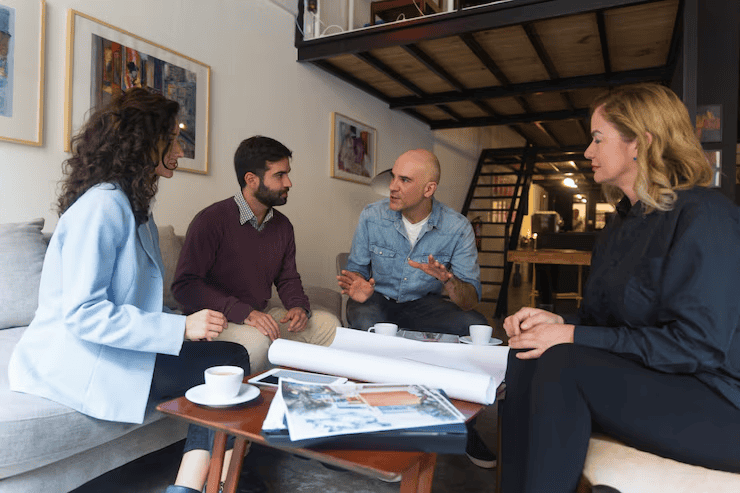
Vanessa will be your first point of contact. She will take some initial details about your project and where you are in the process. From there, Pat will arrange to meet you, usually on-site or at the section you are building on. The goal of that first meeting is straightforward: to understand what you are trying to achieve and give you an honest picture of whether we are the right fit. It is a conversation, and you are free to take it as far as you want to.
How many homes does Coughlan Homes build per year?
We are a small team and we only take on a set number of builds each year. This number will depend on the type and complexity of the houses we are building at the time. Before we commit to a project, we want to make sure we can do it properly. That means having an honest conversation early about your timeline, your brief, and your expectations. If the timing does not work, we can still work with you on the project and help you plan for when it does.
How far in advance should I book a builder in New Zealand?
The earlier the better. For a custom build, getting in touch 3 to 6 months before you want to break ground gives us enough time to work through design, consents, and quoting without anyone feeling rushed. That said, if your timeline is tighter, it is still worth a conversation. We will always give you an honest view of what is realistic.
How much does it cost to build a home in Canterbury?
Every home we build is different, so there is no single figure that applies to everyone. What we can tell you is that our projects typically suit people building a home that reflects a significant lifestyle decision, not just a box to live in. The best way to understand what your build is likely to cost is to have a conversation with Pat. He will give you an honest picture based on what you are actually trying to build, not a number designed to get you through the door.
What is a fixed-price building contract?
A fixed-price contract means the price we agree on before we break ground is the price you pay. Every element of your build is itemised and specified in detail before the contract is signed, so there is no ambiguity about what is included. You are not unduly exposed to our costs going up, our margins changing, or surprises appearing on invoices mid-build. It is the most transparent way to run a project, and it is how we work on every full build.
How does a fixed-price contract protect me?
It removes the single biggest financial risk in a building project: cost blowout. Once your contract is signed, your price is locked. We carry detailed specifications inside every quote so both parties are clear on exactly what has been agreed. On one of our largest builds, completed through the post-COVID period when material costs were moving constantly, price fluctuation across the entire build came in at less than a third of a percent. That is what a fixed-price contract looks like in practice.
What deposit do I need to build a new home in New Zealand?
We require a 5% deposit to get started. That is lower than most builders in the market. We do not ask for large sums upfront. From there, payments are milestone-based and tied directly to your construction schedule. Before we break ground, you will receive a full payment schedule so you know exactly when each payment falls and how much it will be. Every payment lines up with work that has already been completed.
When do I make payments during a build?
For most new home builds, payments are tied to milestones in your construction schedule, not to arbitrary dates. Before your build begins, we provide a full payment schedule aligned to the stages of your project. If you have funds invested and need to plan ahead, we can give you a clear picture of when each invoice is coming. On larger projects, we typically structure payments on a monthly progress or part milestone basis to protect cashflow on both sides. Either way, your full payment schedule is provided before we break ground.
How long does it take to build a home in New Zealand?
The honest answer is that it depends on the complexity of your project. The phases are consistent across all our builds, but a straightforward home and a complex architectural build involve different levels of detail at each stage. As a general guide, from first conversation to keys in hand, most clients should allow 9 to 16 months, with the consenting and design phase accounting for a significant portion of that time. The build phase itself moves quickly once the groundwork is done. We will give you a realistic timeline specific to your project at the very first meeting.
What are the stages of building a new home?
Every Coughlan Homes build follows the same clear process. First, we have an initial conversation and site meeting to understand your brief. From there, we get involved early in the design phase to help you get the most from your plans before they are finalised. Once plans are set, we produce a detailed fixed-price quote. After the contract is signed, selections are locked in early to remove stress during the build. The build phase runs to a set schedule with regular communication throughout. At the end, we do a full handover walkthrough and provide a selections and warranties booklet. Pat then returns for a 90-day check once you have moved in.
How do I keep track of my build progress?
We use Buildertrend, a construction management platform that gives you real-time visibility of your project. Depending on what level of detail you want, we can set up weekly progress reports, schedule updates, and communication through the platform. Some clients want full visibility at every stage. Others prefer to know only the critical dates and milestones. We match our communication approach to what works for you. Either way, you are never in the dark about where your build is at.
Can I make changes once the build has started?
Yes, but there is a process for it. Any change to the agreed scope is handled through a formal variation order. That means the cost and scope of the change are agreed in writing before any work proceeds. We are upfront about this from the start because it protects both parties. It keeps your budget predictable and ensures nothing happens on site without your sign-off. Our detailed upfront specifications mean there is rarely ambiguity about what was originally included, which makes the variation process straightforward when it does come up.
Who is on site managing my build day to day?
Pat oversees the build and is accountable for everything that happens on site. You will also have a foreman allocated to your project, managing the day to day site works. Our carpentry crew are employed directly by Coughlan Homes. For specialist trades, we work with a select group of partners we have used for years, in some cases over 15 years. They know our standards and work to them. You will not arrive on site to find a rotating cast of unfamiliar faces. The people building your home are people we trust completely.
How do you ensure the quality of your builds?
We have an in-house checklist that covers 18 stages of the build process, from foundations through to final fit-out. Every stage is checked and signed off before the next begins. This is not a document that gets handed to whoever is on site that day. It is something our own carpenters are trained on and work to every day. That distinction matters. Because we employ our crew directly rather than subcontracting the work out, we can hold people to a consistent standard across every build. Photos of each completed stage are uploaded to Buildertrend as a documented record. The 90-day post-handover check is the final step, where Pat returns personally to make sure everything is exactly as it should be.
Who will be building my home?
Pat oversees every build personally. He has been building homes in Canterbury for over 22 years and is on site regularly throughout every project. Alongside Pat is Lawrence, our in-house quantity surveyor, who has been with Coughlan Homes for close to 15 years. Lawrence handles the detailed documentation, scheduling, and cost management that keeps your build on track. Vanessa manages client coordination and is your first point of contact when you get in touch. It is a small, experienced team and you will know everyone in it.
Do you use subcontractors?
Yes, and we are open about that. Our carpentry crew are employed directly by Coughlan Homes. For specialist trades, we work with a select group of subcontractors and trade partners, some of whom we have worked alongside for up to 15 years. We choose these people based on the quality of their work, how they align with our values, and how they treat our clients on site. They are not a rotating pool of unfamiliar faces. They are people we trust and consider part of our team.
Who is my main point of contact during the build?
Vanessa is your first point of contact when you enquire. Once your build is underway, Pat is your primary contact for anything relating to the project itself. Lawrence is available for questions about costs, schedules, and documentation. We set up your preferred communication approach at the start of the project, whether that is weekly updates through Buildertrend, regular site meetings, or milestone-based check-ins. You will never be passed around or left wondering who to call.
How long has the Coughlan Homes team been together?
Pat founded the business in 2004. Lawrence joined in 2011 and has been part of the team for close to 15 years. Vanessa has been involved since the beginning. The core of the business has been together through the Canterbury earthquakes, the COVID rebuild period, and more than 100 completed homes. That kind of continuity is not something you find at most building companies, and it shows in how we work together and how we work with clients.
Why do architects like working with Coughlan Homes?
A significant part of our work comes through architect referrals, and those relationships are built on one thing: we make their designs work. We get involved early, we understand how to value-engineer without compromising the design intent, and we bring practical solutions to the table before problems appear on site. Architects trust us because we respect their work and communicate clearly throughout the process. If something needs to change, we say so early and come with options, not just problems.
Do you build rural homes in North Canterbury?
Yes. We have been building rural and farm homes in North Canterbury since 2013. It is a core part of what we do, not a side service. Our longest-standing rural relationship is with Ngāi Tahu Farming, one of the largest private landowners in New Zealand, for whom we have been the building partner for over 13 years. That relationship is built on the same foundations as everything else we do: reliability, honest pricing, and showing up when we say we will.
What is different about building a rural home compared to a standard build?
The process and the standards are the same. The context is different. Rural builds often involve remote sites, tighter logistical constraints, and clients who have very specific ideas about how a working property needs to function. Farm homesteads are built to last generations, not just to a floor plan. We understand that and design accordingly. The other difference is timing. Rural clients often have critical dates tied to farming seasons or operational schedules. We plan around those dates and treat them as fixed.
Who do you work with on rural builds in Canterbury?
Our primary rural partner is Ngāi Tahu Farming, with whom we have worked since 2013. Ngāi Tahu is one of the largest private landowners in New Zealand and has extensive farming operations across the South Island, including large-scale dairy conversions in North Canterbury. We have completed multiple homes for them over 13 years. We also work with private farming families in the wider North Canterbury and mid-Canterbury regions.
How far from Christchurch do you build?
Coughlan Homes builds across the wider Canterbury region, including sites an hour or more from Christchurch. Our rural work is primarily in North Canterbury, north of Christchurch towards the Hurunui district, and we have also completed work in mid-Canterbury. Distance is planned for rather than absorbed as it comes. Materials, crew, and specialist trades are scheduled around the site’s access, and on some rural builds the crew has based itself on site for extended periods to hold the programme. If you are unsure whether your property is within range, the quickest answer is to describe the location to Pat.
Can I build a rural home on a farming property?
Yes. Most of our rural work involves building on working farming properties, including homesteads, manager’s residences, and farm worker housing. If you have a site and a brief, we can work with you from early in the design phase to make sure the build is practical for the way the property operates, not just designed to look good on paper. The same fixed-price contract and build process applies as with any other Coughlan Homes project.
What happens after I move into my new home?
Handover is not the end of the relationship. When we hand over your home, we do a full walkthrough with you covering how everything works, and Lawrence prepares a selections and warranties booklet that documents your finishes, materials, and all relevant guarantees. You leave with a clear record of your home. From there, Pat returns personally at the 90-day mark to check in, go through the home, and address anything that needs attention. That check is built into every project we deliver, not offered as an optional extra.
What is the Master Builders guarantee in New Zealand?
The Master Build Guarantee is funded directly by Registered Master Builders and includes ongoing insolvency cover. It covers structural defects, non-completion, and deposit protection. We use it as our primary guarantee on our projects. The first two years cover workmanship. From there, cover extends to structural and weathertightness issues for the remainder of the 10-year term. Critically, this guarantee sits independently of Coughlan Homes. If anything were to happen to us as a business, the guarantee remains in place and the client is still protected.
What warranties come with a new build in New Zealand?
Under the Building Act 2004, every new residential build in New Zealand comes with two automatic protections: a 12-month defects liability period and a 10-year implied structural warranty. These are the legal minimum and apply regardless of who builds your home. On top of this, we provide the Master Build Guarantee, which is funded directly by Master Builders and includes ongoing insolvency cover, extending and formalising that protection. Where specialist trade work is involved, such as waterproofing membranes, the licensed applicator carries their own producer statement and warranty, typically a minimum of 10 to 15 years on that specific element.
What if something goes wrong after handover?
Call us. That is the short answer. During the first 12 months after handover, the obligation sits with us to demonstrate that something is not a defect. We do not make clients fight for repairs. After 12 months, if something arises, the client needs to demonstrate it is a defect, but we remain liable for a reasonable period beyond that. In practice, if something is wrong with a home we built, we want to know about it and we will sort it out. That is not a marketing line. It is how Pat has operated for 22 years.
Does Coughlan Homes stay in touch after the build is finished?
Yes, and not in a formal way. Pat is genuinely friends with most of the people we build for. The 90-day check is the formal part. What comes after that is just how Pat operates. He catches up with past clients regularly and considers many of them long-term friends. For the families we have built generational homesteads for in North Canterbury, that relationship goes back over a decade. We do not see a completed build as the end of anything. It is usually the start of a long connection.
want to know more?
Still have a question?
Every build is different and not every question fits neatly into a list. If something is on your mind that you have not found an answer to here, the best thing to do is get in touch. Pat has been answering questions about building for 22 years. No question is too early, too basic, or too detailed.